



Thermoplastic composites are emerging as one of the key technologies for the next generation of aircraft structures. Unlike traditional thermoset composites, which require long curing cycles inside autoclaves, thermoplastics can be heated, formed and cooled in much shorter cycles.
This allows parts to be manufactured in minutes instead of hours, enabling higher production rates and more automated manufacturing processes. In addition, thermoplastic parts can be welded instead of extensively assembled with mechanical fasteners, helping reduce assembly complexity and weight.
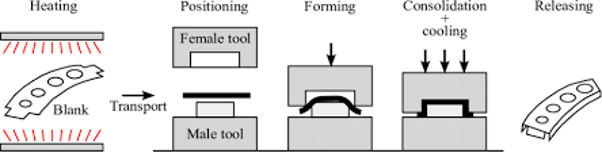
Figure 1 Stamp-forming process for thermoplastics, from a 2D blank to a 3D part in minutes
Because of these advantages, thermoplastic composites are attracting growing interest across the aerospace industry, especially for future aircraft programs where industrial efficiency and production rate will become increasingly important.
For this reason, Aernnova is currently developing several R&D activities focused on thermoplastic manufacturing technologies and their future industrial application.
FUTURE Project: Automated Manufacturing Technologies
One of Aernnova’s main developments in this field has been the FUTURE project, focused on creating an integrated manufacturing chain for thermoplastic aerostructures.
The project combined several technologies, including automated tape layup, infrared heating, hot press consolidation, 3D stamp forming and continuous ultrasonic welding. Representative aeronautical demonstrators made of LM-PAEK carbon fiber composite were manufactured, including stiffened structures with welded stringers.
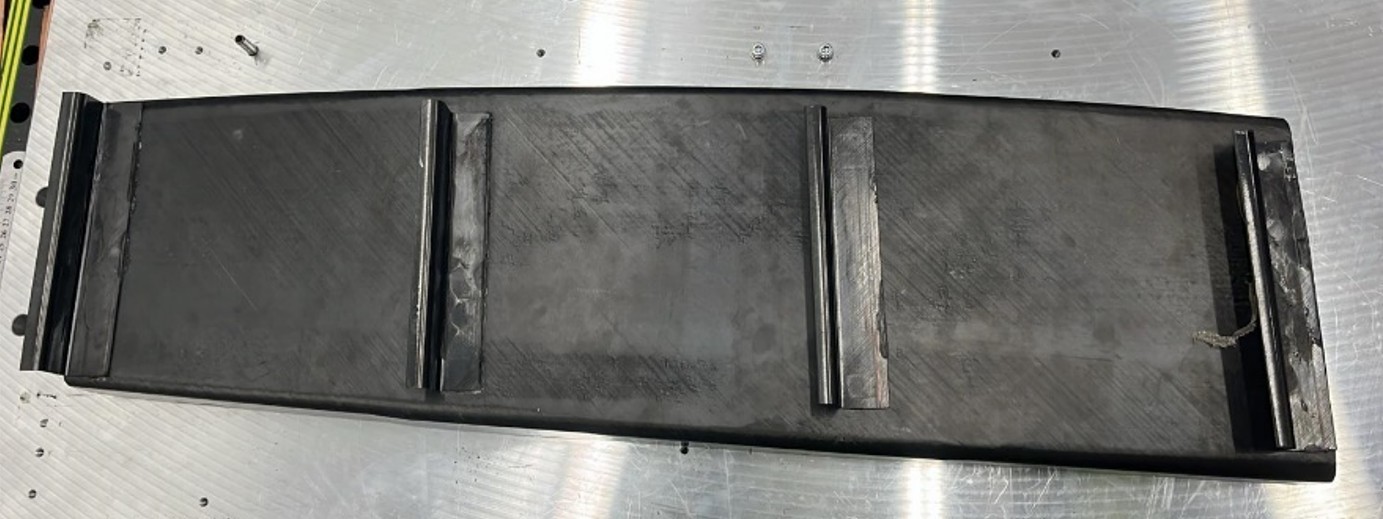
Figure 2 Rib manufactured by stamp-forming in an automated chain including layup and welding of stiffeners
A key objective was validating manufacturing parameters such as temperature, pressure and welding conditions under representative industrial conditions. Dimensional inspections and non-destructive testing were also carried out to verify the quality and repeatability of the parts.
Beyond the demonstrators themselves, the project has contributed to building internal know-how in automated thermoplastic manufacturing technologies for future aircraft applications.
UPWING Project: A Thermoplastic Leading Edge Demonstrator
In parallel with FUTURE, Aernnova has also participated in the UPWING project within the Clean Aviation framework.
The project focused on the manufacture of a 2-meter-long thermoplastic leading-edge demonstrator using out-of-autoclave technologies. The manufacturing process combined infrared heating and hot stamp forming techniques to shape the composite laminates in short production cycles.
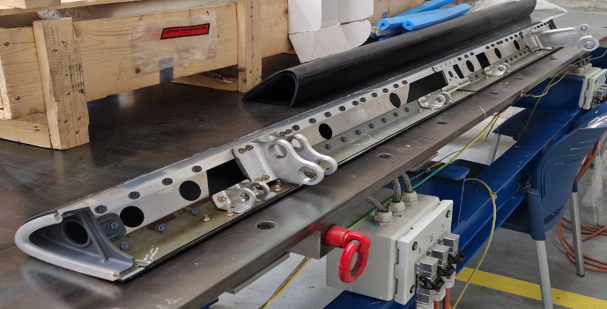
Figure 3 Two meter-long thermoplastic Leading Edge with bonded stringers
One of the main challenges was controlling distortions during forming. To address this, digital simulations and tooling compensation strategies were used before manufacturing the final parts.
The project also explored advanced bonded and rivet-less assembly concepts, integrating thermoplastic and metallic stiffeners into the structure. Dimensional inspections and non-destructive testing were performed to validate the assemblies.
UPWING represents another important step in the development of large thermoplastic aerostructures at Aernnova.
Preparing for Future Aircraft Programs
Thermoplastic composites are not expected to replace all existing composite technologies, but they are becoming increasingly relevant for structures where production rate and industrial efficiency are critical.
Projects such as FUTURE and UPWING allow Aernnova to continue developing internal capabilities in automated manufacturing, thermoplastic forming and structural welding, while gaining experience with representative aeronautical components and industrial-scale processes.
Although important industrialization challenges still remain, these projects are helping Aernnova build the knowledge and manufacturing capabilities required for the next generation of composite aerostructures.
