Sixteen years ago, the then director of engineering, José Ignacio Ibarreche, stopped me in a hallway. Talking and thinking at his characteristic speed, he threw around terms like “neutron source” and “carbon fiber chopper.” I confess that at the time I didn’t understand a thing. But that seemingly cryptic conversation was the seed of an extraordinary journey that culminates today. An exciting and strange journey that has taken our aeronautical know-how to the heart of the most advanced science.
What is truly surprising about this journey is where it has taken us. Today, Aernnova, together with Airbus Germany, are the only companies in the world that have proven capable of developing and delivering a fast carbon fiber neutron chopper. This is not just any component: it is a 700 mm diameter disc made of composite material, which rotates at such extreme speed that its tip experiences centrifugal acceleration a hundred thousand times greater than Earth’s gravity. A mechanical engineering record that has demanded all our expertise.
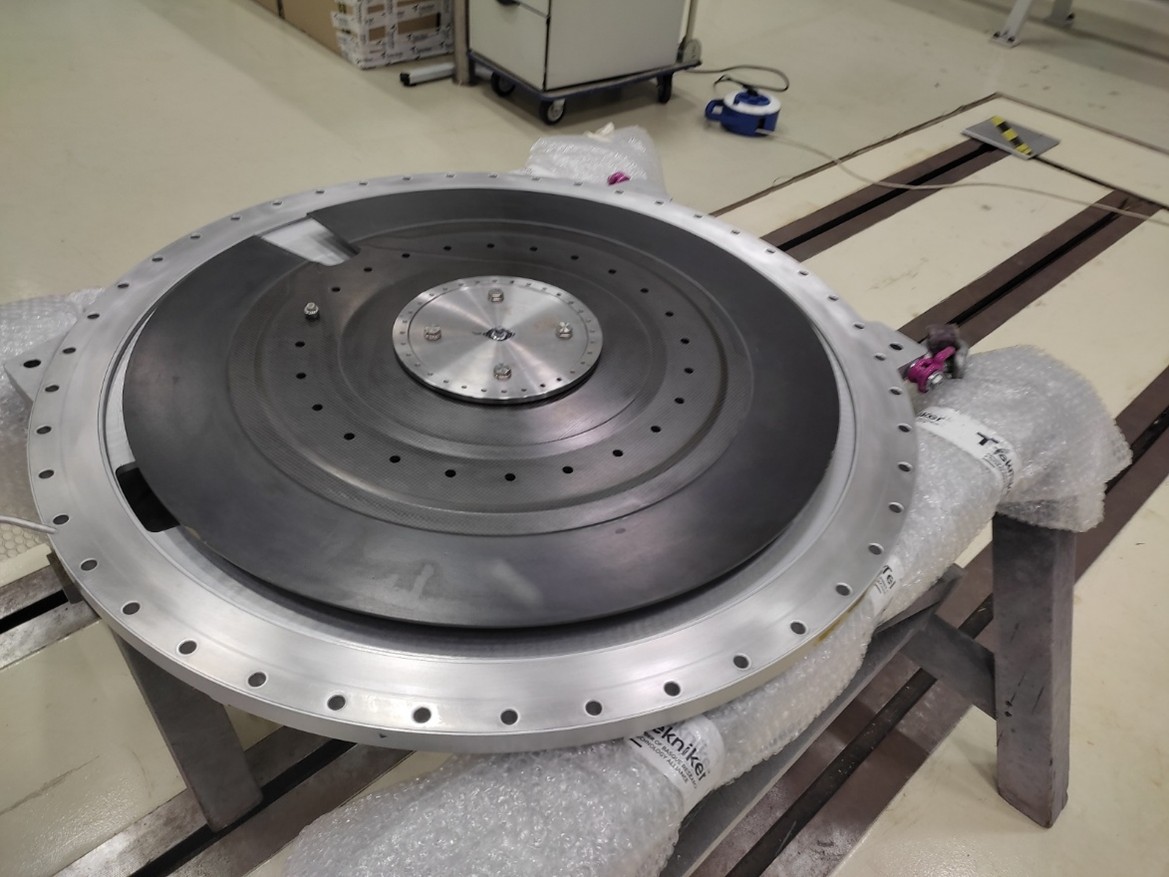
Photo 1: MIRACLES PWD chopper disc
But what is this technical feat for? Its destination is the European Spallation Neutron Source (ESS ERIC), a consortium of 13 European countries that is building one of the largest scientific infrastructures on the planet in Sweden. With a budget of more than €1.8 billion, it will generate intense neutron beams—not through fission, like a reactor, but by “hitting” a metal target with protons—to study the intimate structure of matter. Our chopper will travel there, where it will be the heart of the MIRACLES instrument.
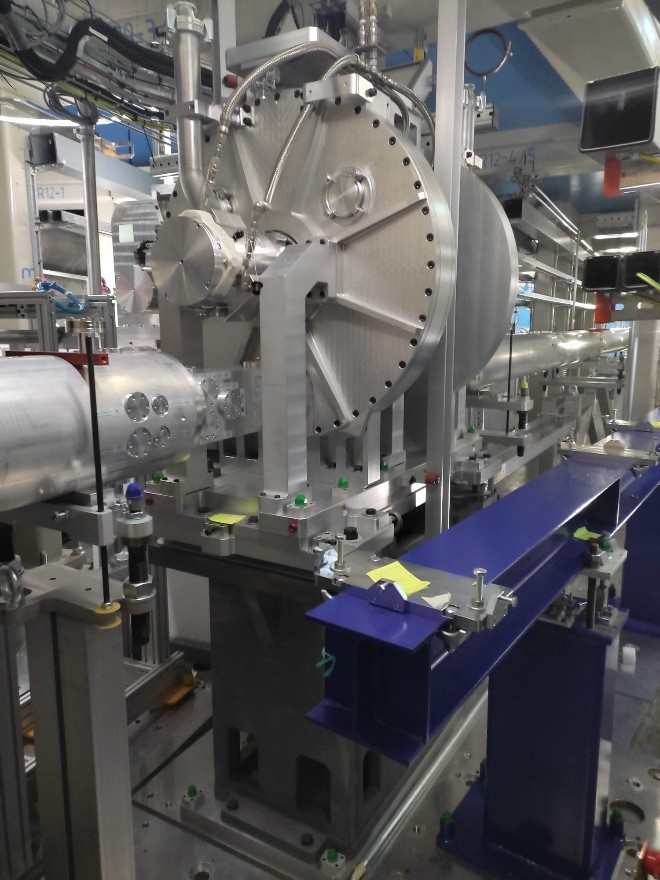
MIRACLES, a key element of Spain’s participation in ESS led by ESS Bilbao, is a spectrometer: a kind of giant microscope 160 meters long. Its mission is to analyze materials using neutrons of a very specific wavelength. And this is where our disc comes in. The fast chopper is the heart of the system, generating 252 neutron pulses every second. Together with two other slow aluminum discs, it acts as a shutter for these particle pulses. As it rotates, with its neutron-absorbing boron coating and windows, it allows only neutrons with the specific wavelength (λ= 6.27 Å) to pass through, which the Si(111) silicon mirrors located behind the samples are able to reflect towards the neutron detectors.
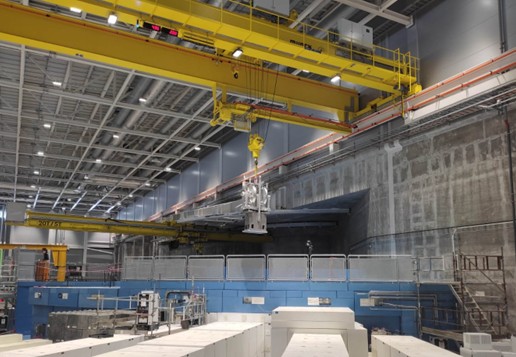
Photo 2: Introducing the chopper into the heart of the ESS.
Designing and manufacturing the disc working hand in hand with AED and Fibertecnic was just the beginning. The challenges of integrating the complete machine were also formidable. Here, collaboration with our colleagues at Tekniker has been key. Together, we learned to balance the disc with a precision a hundred times better than a car wheel (7 g·mm); to manufacture vacuum chambers with a hundred times greater tightness than those wheels (leak rates <10^(-7) mbar·l\/s) using metal gaskets, as plastic ones would not withstand the intense radiation; and to position all the equipment remotely from a bridge crane, moving it into position with an accuracy of 100 microns.
Looking back, from that intriguing conversation in the hallway to the final delivery in Sweden, we are no longer the same. This project has led us to think differently, to solve problems we didn’t even know existed. It has been a revelation: that advanced engineering is universal, and when we combine talent and effort, there are no boundaries—not even atomic ones—that we cannot explore